
How to choose a kitchen sink - which style is the right one for my kitchen?
The sink is the hardest-working part of your kitchen - choose the wrong one and you could be dealing with awkward worktop templating, a unit that doesn't fit, or a style that fights with the rest of your design.
Whether you're renovating a Victorian terrace in Southsea, updating a cottage in the New Forest or planning an extension in a Hampshire home, here's a straightforward guide to the three most popular choices: undermount, Belfast and Butler.
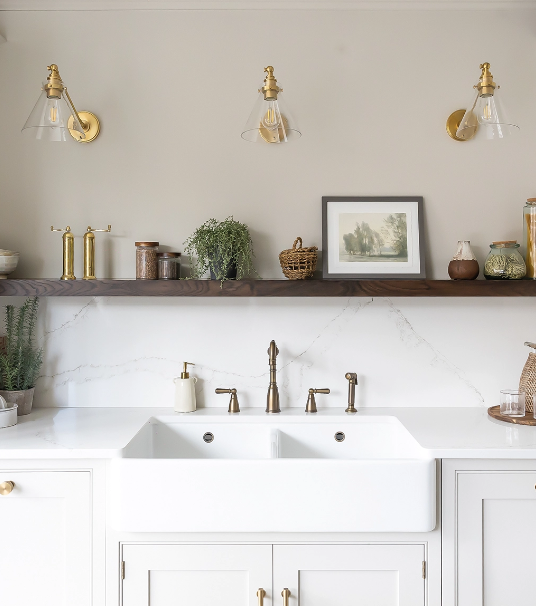
Photo by Tom Howley
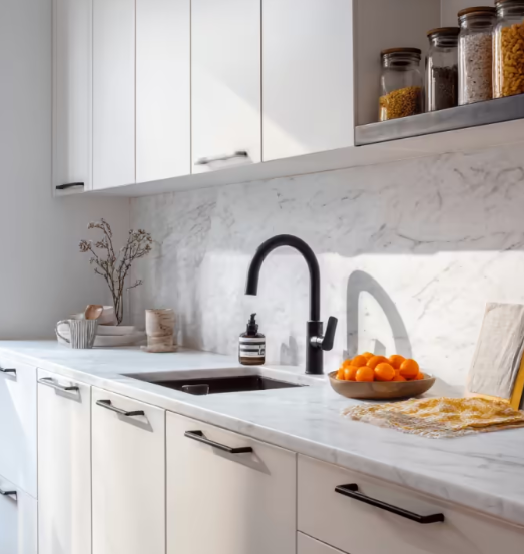
Photo via Pinterest
Belfast and Butler sinks: timeless and traditional
Both Belfast and Butler sinks have a classic, characterful look. They suit shaker-style kitchens beautifully, which makes them a popular choice for period properties and country-style kitchens across Hampshire. They're also a lovely way to add a touch of tradition to a newer home.
Belfast sinks are narrower and deeper than Butler sinks and have a weir overflow. They're typically 600mm wide. The depth makes them great for larger families, as there's plenty of room for washing up big pans and baking trays.
Butler sinks are wider and shallower than Belfast sinks and traditionally come without an overflow. They're usually around 800mm wide, so they take up more room and are better suited to larger kitchens. They're also a great option for a utility room, especially if you need to wash a muddy dog after a walk on the Hampshire coast or in the forest.
Things to know before you choose either:
Both are heavy, and both need to be installed before the worktop is templated
Both need a specific unit to sit on, so your sink choice has to be made early in the kitchen design process, not left until the end
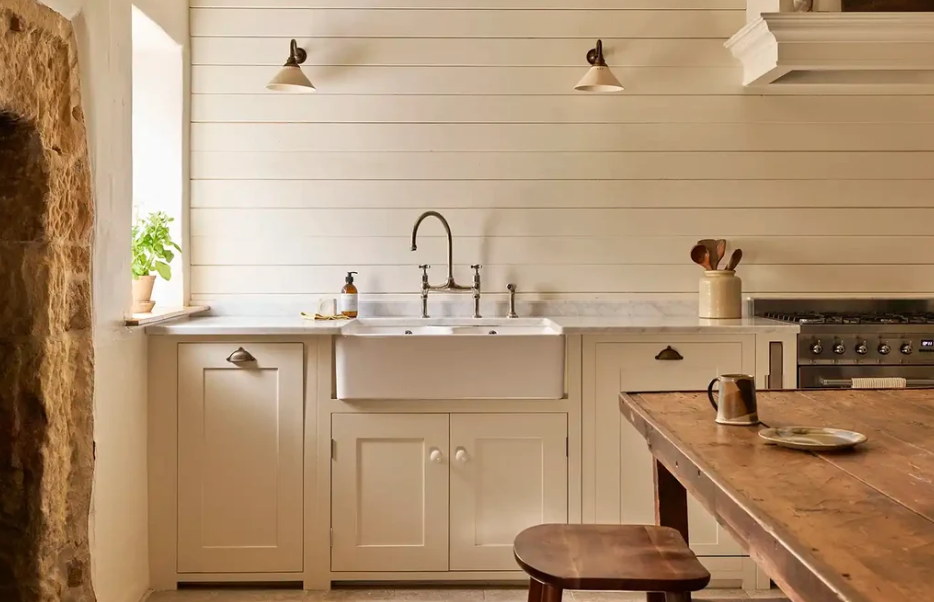
Photo by Neptune
Undermount sinks: sleek and versatile
An undermount sink sits underneath the worktop, giving a streamlined look that feels less bulky. They come in a wide range of materials and sizes, which makes them the most versatile option and an easy fit for contemporary and transitional kitchens.
They're also easier to keep clean. With no visible gaps around the edge, there's nowhere for water and crumbs to collect. They’re also a great choice for an island, helping to maintain a clean, streamlined look.
An undermount sink needs to be on site during worktop templating, but it doesn't need to be fitted yet.
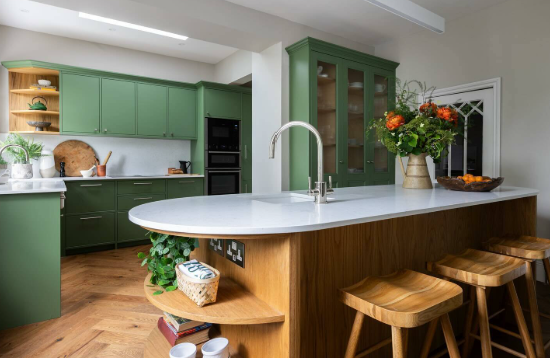
Photo by Farrow & Ball
Other sink options to consider
Overmount: this sits over the top of the worktop. It's usually a cheaper option and comes in a variety of styles and materials. It does need a little more maintenance, as the lip around the edge can cause dirt to build up.
Integrated: a sink made from the same material as the worktop, continuing the same look and feel throughout. It's perfect for a contemporary kitchen, with no gaps or seals to keep clean, but it's a more expensive option.
Prep sink: a smaller, secondary sink, usually undermounted. It's really useful if you cook and serve a lot of food and want a smaller sink close to where you prep and wash vegetables.
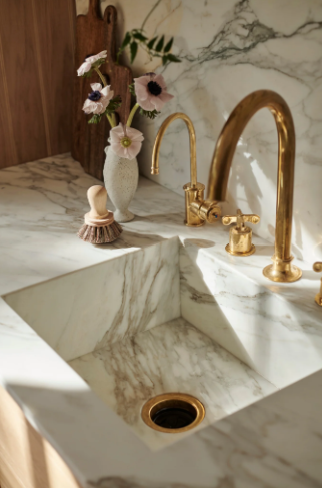
Photo by Neptune
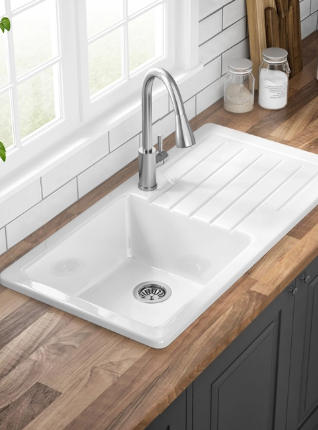
Photo by Tapwarehouse
Which should you choose?
Love a traditional look, or have a shaker kitchen? Go for a Belfast or Butler
Big family, lots of pans? A Belfast gives you depth
Generous kitchen or a utility room? A Butler suits the space
Want sleek, easy to clean and flexible? Choose an undermount
Watching the budget? An overmount could be the answer
Want a seamless contemporary finish? Consider an integrated sink
Whichever you choose, decide early. Your sink affects your units, your worktop and your fitting schedule, so it's one of the first things to decide in a kitchen design.
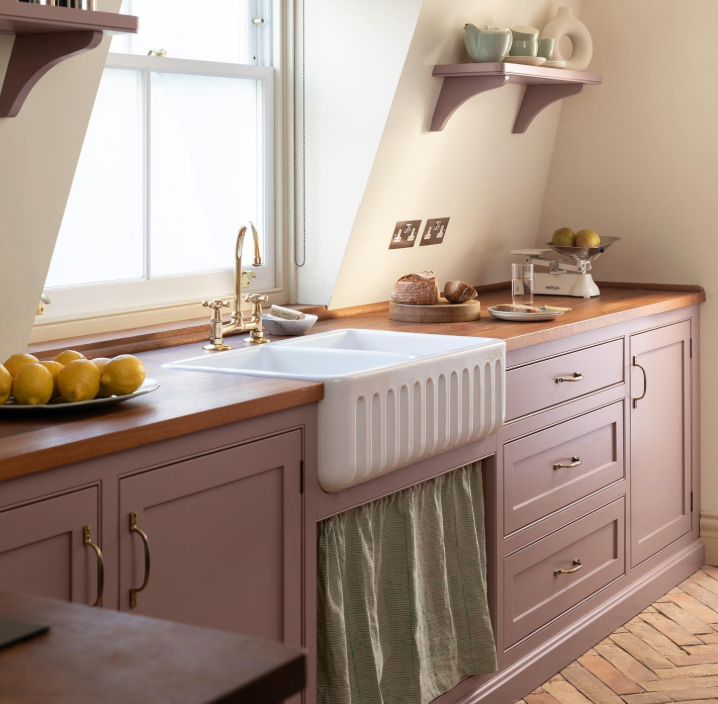
Photo by Farrow & Ball
Need help deciding?
Kitchen design decisions can feel overwhelming, and the sink is just one of dozens. If you'd like to talk through your layout, get some reassurance, or get help choosing worktops, fixtures and fittings, my interior design Power Hour can help you solve your kitchen design dilemmas quickly.
To book, get in touch at hello@jadelisainteriors.com or book a FREE discovery call to find out more.